
by Charlotte Selmer
In our screen-dominated world, the significance of video content marketing continues to become more prevalent. The impact of video marketing is supported by compelling data: 87% of businesses leverage video as a marketing tool, and this trend persists for one straightforward reason—it delivers results.
This emerging strategy involves creating targeted content aimed at specific demographics to promote a brand’s products or services. Video marketing strategies can be used across diverse channels to effectively engage with the target audience.
Videos serve as effective content marketing solutions for brands to convey their message in a highly accessible format for their audience. With the wide variety of options available through video content, it serves as a versatile medium that can benefit any business.
Why Video Content Matters
Video content marketing is crucial in today’s digital landscape for its ability to connect and engage with audiences. In a recent study, it notes that there are 3.48 billion digital video viewers worldwide. Videos tend to capture attention more effectively than other forms of content. They provide a dynamic and visually compelling way to deliver messages, making complex information easier to understand and retain. Video content helps to build credibility with consumers which is an essential element of growth.
Video content is highly shareable and can exponentially increase brand reputation and reach. People are more likely to share videos on social media platforms, leading to greater exposure. Videos have a significant impact on SEO, as search engines like Google prioritize websites with video content.
Benefits of Video Content Marketing
- Enhanced SEO: Brands that utilize video content are more likely to rank higher in search engine results, driving more traffic to your website. According to an article from Digital Marketing and Impact of Video, Google increased video optimization by 53 times!
- Building Customer Relationships: Video content can be created in unique ways and can be repurposed for different types of platforms, to maximize reach. 81% of people have been convinced to buy a product after watching a brand’s video content.
- Competitive Advantage: Utilizing video content sets businesses apart from competitors and demonstrates innovation by engaging audiences and showcasing products or services in a more interactive and impactful way.
- Increased Conversion and Sales: According to Wyzowl’s research on video marketing statistics, 87% of people noted that video has directly increased sales
- Increased Engagement & Awareness: Videos capture and retain viewers’ attention more effectively than text or static images, leading to higher engagement levels. Video content can reach a wider audience and increase brand visibility, especially when shared across social media platforms.

Types of Video Content Marketing
- Product Videos
These video formats are effective for highlighting your product or service and generating interest. Utilizing different approaches such as demo videos can demonstrate the functionality and features of your product, while launch videos create anticipation and excitement for upcoming product releases. These strategies leverage video content to engage and captivate audiences, ultimately driving interest and boosting engagement with your brand or offerings. Nike develops a compelling product video around the Nike Free product line, showcasing the shoe’s innovative design and its benefits.
2. Testimonial Videos
Utilizing customer testimonials is a powerful strategy for transitioning customers from initial interest to making a purchase decision. When consumers are weighing options between similar products, they frequently turn to reviews from past customers, often favoring brands with positive feedback. Similarly, employee testimonials can provide insight into a company’s values, influencing consumers to support businesses that prioritize ethical workplace practices. Dove, for instance, employs customer testimonials effectively by sharing the story of Molly Burke.
3. Social Media Videos
Social media videos are crafted specifically for sharing on platforms such as Facebook, Instagram, and TikTok. These promotional videos are typically created to introduce a business or offer an overview of the brand in a casual, captivating style. They are usually short clips that are intriguing and convey the message quickly. Poppi, an emerging gut-healthy soda alternative, leverages social media video marketing through a recent Instagram reel to promote the launch of a new flavor.
4. Brand Promotion Videos
Brand-oriented videos are a key element of advertising campaigns, captivating audiences by showcasing the company’s vision, mission, products, and services. These videos aim to establish a strong connection with viewers, conveying the brand’s values and unique offerings in a compelling and memorable way. They play a crucial role in building brand awareness and fostering customer engagement across various digital platforms. Grammarly promotes its service through a promotional video featuring a storyboard and animation designed to be easily understood by students. This engaging approach helps students grasp the benefits of Grammarly’s services effectively.
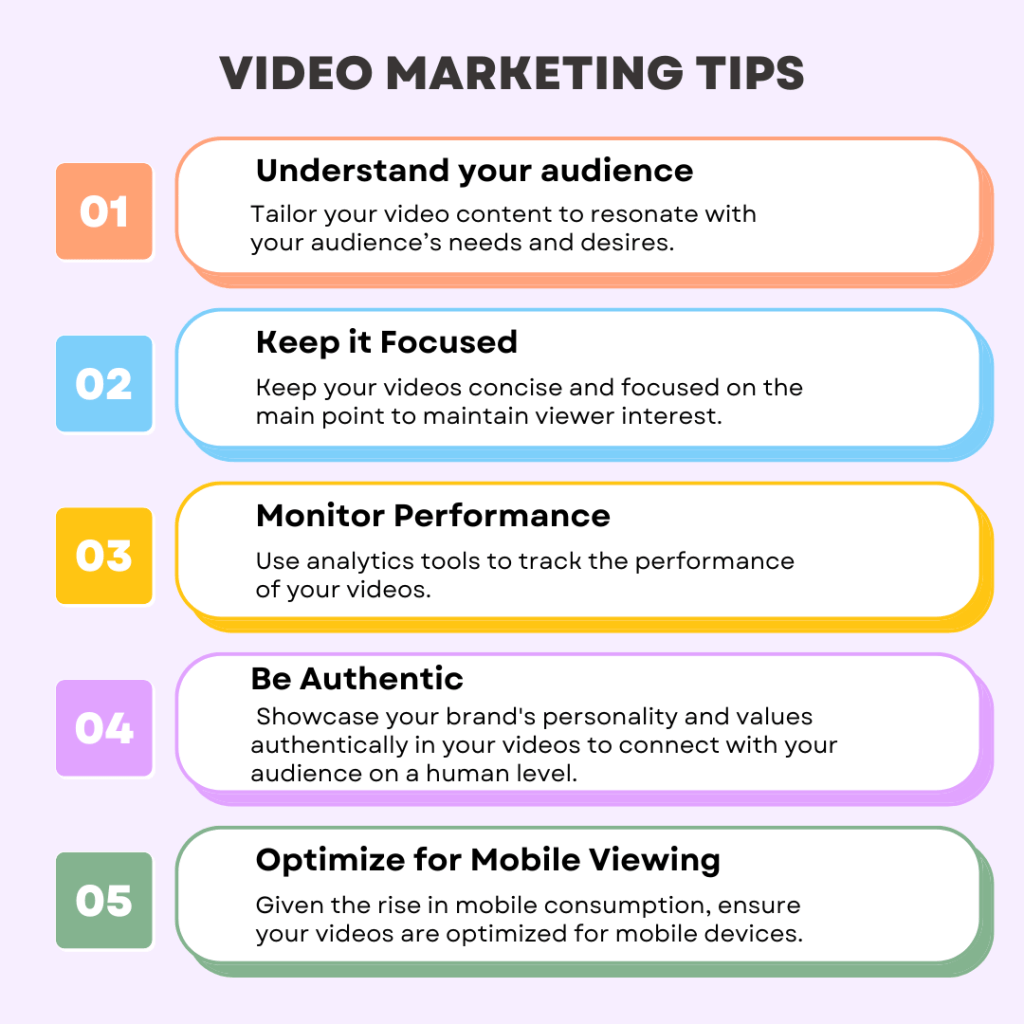
Tips for Creating Compelling Video Content
- Understand your Audience: Tailor your video content to resonate with your audience’s needs and desires.
- Keep it Focused: Keep your videos concise and focused on the main point to maintain viewer interest.
- Monitor Performance: Use analytics tools to track the performance of your videos.
- Be Authentic: Showcase your brand’s personality in your videos to connect with your audience on a human level.
- Optimize for Mobile Viewing: Given the rise in mobile consumption, ensure your videos are optimized for mobile devices.
Concluding Thoughts
As you embark on your video content marketing journey, continue to:
- Experiment
- Analyze performance metrics
- Adapt strategies
- Stay attuned to trends
Video content marketing offers an impactful way for businesses to connect with their audience and achieve marketing objectives. The key to success comes from creating valuable, relevant, and authentic videos that resonate with your audience. The journey is not just about creating videos—it’s about crafting compelling narratives that resonate authentically and drive meaningful engagement.
References
 AMA University of New Hampshire
Leave a comment