By Kylie Gates
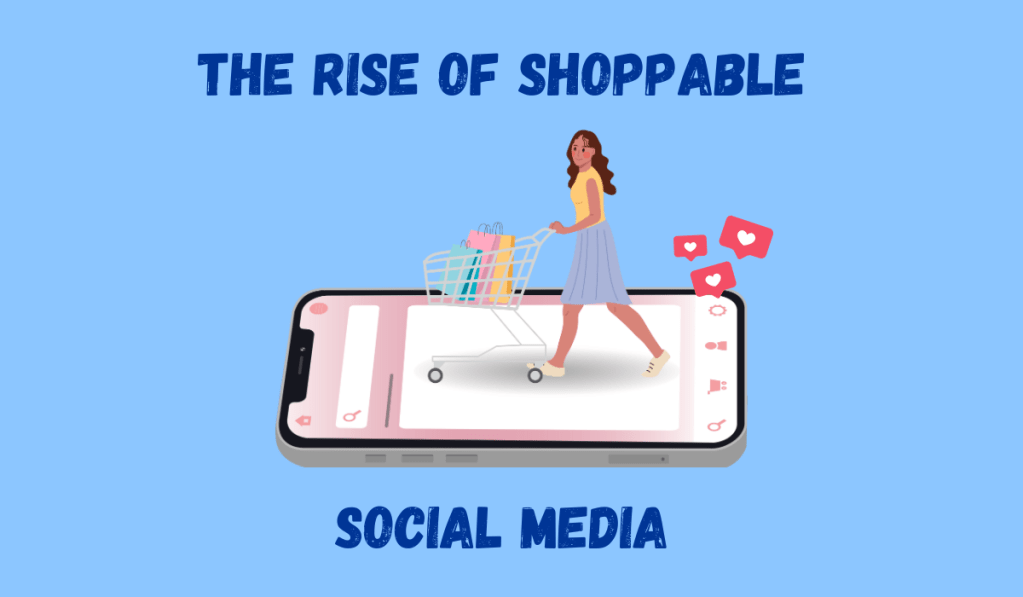
Social media has evolved immensely over the years. It originally started by providing an online platform that connects people digitally from all over the world. Overtime, social media has grown to become a popular place for businesses to market and create exposure for their brand. Additionally, this has grown to enabling businesses to physically sell their products directly on the apps. The rise of shoppable social media has become an extremely effective tactic for the marketing industry. This has created a seamless way of advertising products on the apps that people find themselves scrolling on for way too long. Businesses can link their website right from the advertisement where consumers can purchase the product through just a couple clicks – it’s as simple as that!
How is shoppable social media effective?
There has been a significant shift between consumers’ shopping habits. Online shopping was invented in 1979 but didn’t become popular until the 1990s. As of 2023, 37% of consumer spending was from in-store shopping, compared to 63% of consumer purchases being online. As marketing experts can see this trend of online shopping becoming increasingly more popular, they used this information to their advantage and created a much more effective way of online marketing.
Social media platforms thrive on user engagement. The addition of shoppable features make it easier for users to interact with a brand without fully acknowledging the marketing goal. This leads to impulse buying, as social media users can simply tap the product, add the item to their cart, enter in their shipping and payment information, and place the purchase. It’s as easy as that!
Marketing through social media also allows for integrated advertisements. This allows advertisements to blend into your feed naturally and in a non-intrusive way, making it less likely for users to skip through them. These ads can also be targeted based on demographics, interests, and behavior, which allows for more personable and relevant advertisements. It is found that two-thirds of shoppers today use social media as their top shopping strategy due to the easy access to purchasing products and the personalized advertisements.
Platforms for Shoppable Social Media
Instagram and Facebook shopping enables product tagging features, which is where businesses and influencers can tag their products directly in their post. This makes it easily accessible for the user to purchase the desired product right then and there. This is a great marketing tactic because it catches the user’s attention as they are scrolling through their feed or tapping through stories. Since Instagram has such a large user base, it is one of the prime platforms for reaching potential customers. Based on the target market for the product, businesses may choose between Instagram or Facebook for their advertisements. Millennials are the majority users for both apps, however, Instagram leans towards the 18-29 age group, whereas Facebook targets older generations, with a good portion being the 50+ age group. Gathering data about the target market for the product being sold is essential to deciding which platforms the product should be advertised on.
TikTok Shop launched on September 12, 2023, and has grown immensely over this past year. Influencers can link the product they are advertising directly in the TikTok video caption. This is a highly effective way of marketing as millions of people mindlessly scroll on TikTok daily, and they come across these “videos” that are really an advertisement for the product being shown. Products can be advertised through the shoppable videos, shoppable ads, live streams, and the “TikTok shop” tab located next to the main “For You Page” feed. TikTok’s are also a great way creators can demonstrate the products and give an in-detail review to the viewer, which makes this an adequate marketing opportunity.
Pinterest is known as a visual social media platform, where people search and scroll for inspiration. As social shopping has grown in the last couple years, Pinterest now has a feature that allows the users to buy products directly from the pins. As users scroll for inspiration, the social shopping marketing tactic makes it a lot easier for them to buy the products they are interested in and gathered inspiration from. This proves that social shopping is not only beneficial for the businesses, but it is also beneficial for the consumers who are looking for inspiration on what to purchase.
Concluding Thoughts
Marketing is essential to running a successful business. As the world becomes more digital and technology driven, marketing and advertising strategies must adapt to this evolving world becoming increasingly focused on social media. It’s one thing to simply advertise your product on social media, but it’s been significantly more effective through the visually appealing advertisements that stops users in their tracks. This seamless way of advertisement has changed businesses’ marketing strategies for the better.
References
In-Store vs. Online Shopping Statistics
 AMA University of New Hampshire
Leave a comment