
By: Kylie Gates
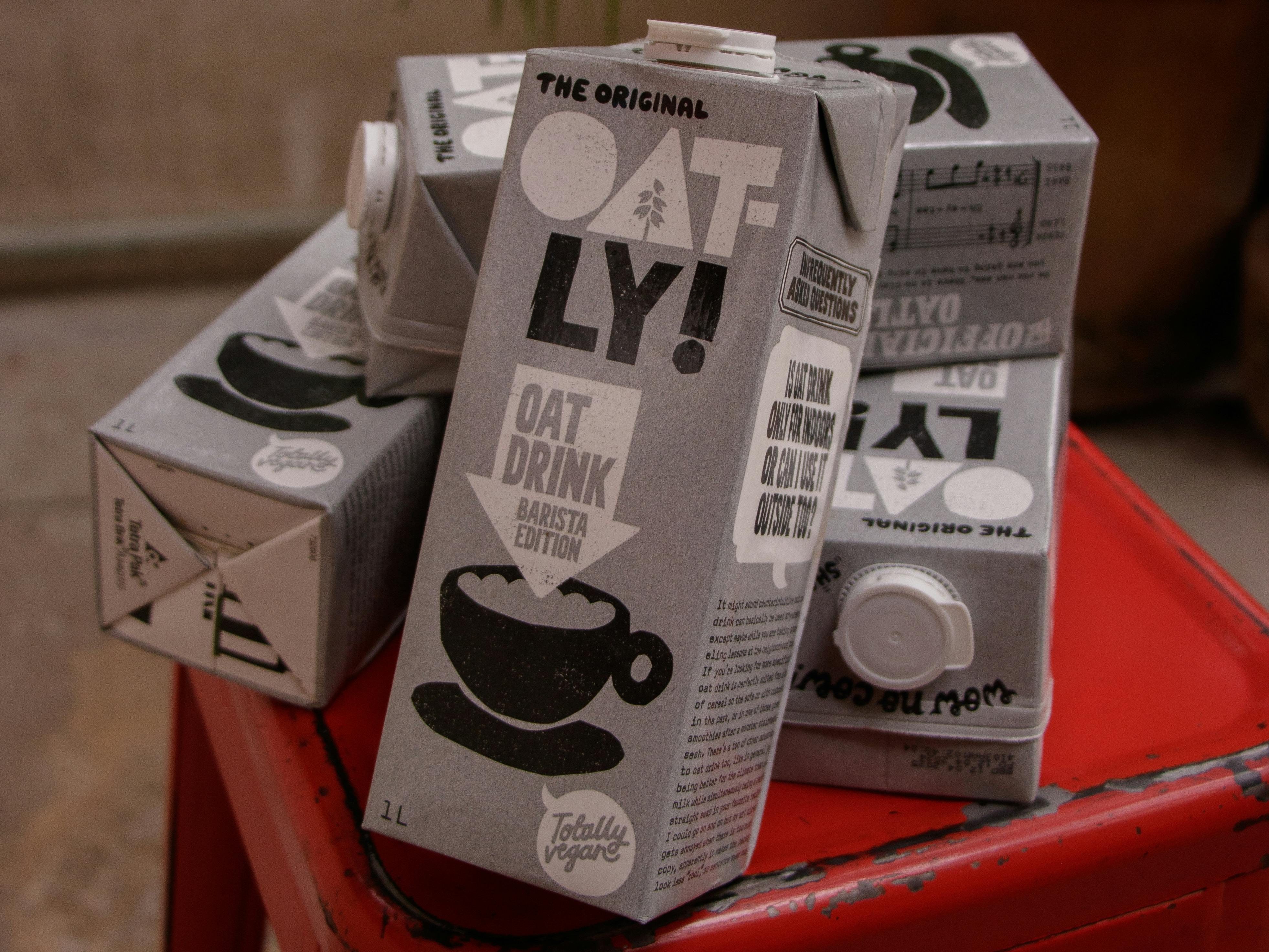
What started as a simple oat drink has grown into one of the most recognizable names in plant-based milk due to strategic marketing tactics that everyone should take notes from. Originally founded in 1994 by Swedish scientists who discovered that oats could be used as a non-dairy milk alternative, Oatly entered a market where plant-based milk already existed. However, their approach sparked a boom in the industry. What sets Oatly apart other than their oat-based products, is its bold branding, disruptive marketing campaigns, and purpose-driven messaging. These marketing strategies have strengthened Oatly’s memorability and influence, becoming a significant driver of the brand’s success.
Brand Identity: How Oatly Built a Distinct Voice
A key factor in Oatly’s success is its distinctive brand identity. The company uses a quirky, conversational tone across all of its marketing materials, from packaging to advertisements. Its handwritten-style typography and humorous messaging make the brand feel personal, approachable, and instantly recognizable. This playful voice not only captures attention in a crowded market but also helps foster a sense of community among consumers, who enjoy engaging with the brand both online and in-store. Oatly’s success
demonstrates the impact of combining a high-quality product with creative, memorable marketing that resonates with its audience.
Barista Partnerships + Retail Strategy
Alongside developing innovative, healthier milk alternatives, Oatly embraces a bold marketing strategy that boosts its visibility and reinforces its brand identity. Instead of relying on traditional mass media campaigns, the company focuses on partnerships with coffee shops to introduce its non-dairy products directly to coffee drinkers. The “Barista Edition” oat milk, specially formulated for steaming and frothing, became a huge hit in the coffee industry. This version of oat milk is the one coffee shops commonly use, as it blends seamlessly with espresso. Leveraging coffee shops to expand the use of their product has been a major success for Oatly, helping them establish a strong presence in the coffee industry. Coffee culture is more serious than it might seem. Coffee drinkers are often particular about their beverages, especially as plant-based milk options continue to become more popular. By targeting this market, Oatly has successfully made a name for itself among both baristas and consumers.
Purpose-Driven Marketing & Sustainability
By first targeting coffee drinkers, Oatly also expanded into the market of sustainability-conscious consumers which has become another strong focus for the brand. Emphasizing a commitment to sustainability resonates strongly with the plant-based community. The brand has focused on creating products with a lower carbon footprint than traditional dairy, and their efforts have paid off. According to Oatly’s 2024
Sustainability Update, their products were the first in the world to qualify as Climate Solutions Products in the “milk category”. Highlighting this mission in their marketing material not only helps promote the product, but also effectively connects with consumers who care deeply about the environmental impact of the products they buy.
Disruptive Campaigns & Bold Messaging
Oatly’s blunt, humorous marketing often pushes boundaries, creating disruption that naturally attracts public attention. In 2014, for example, the company produced a Super Bowl commercial featuring CEO Toni Petersson singing his song “Wow, No Cow” while standing in an oat field in Sweden and playing an electric piano. The ad was intended to be humorous and engaging but was later pulled after Oatly was sued by the Swedish dairy lobby for allegedly “disparaging milk from a cow”. The ad was banned for being “misleading,” as some argued it suggested that dairy milk was harmful. However, the controversy only amplified Oatly’s visibility, as the story quickly spread across social media.
Another example of Oatly’s playful marketing is the headline, “It’s like milk, but made for humans”. This bold, humorous line challenges traditional dairy in a way that some consumers see as provocative, sparking conversation and reinforcing Oatly’s identity as a brand unafraid to take risks. By focusing on humor and sarcasm, Oatly consistently gains publicity, attracting customers who value this authentic approach. This has helped them stand out in the crowded plant-based market.
Oatly’s Visual and Social Strategy
Oatly doesn’t just rely on taste to win over customers, it turns its packaging into a conversation starter. It serves as an extension of the brand’s personality and marketing strategy. The company uses bold, handwritten-style typography to grab attention on crowded grocery shelves. This distinctive design makes the product instantly recognizable and encourages consumers to engage with it, both in-store and online. Visual appeal plays a major role in what products people choose in stores, as shoppers are naturally drawn to eye-catching and interesting packaging.
Beyond visual appeal, the packaging acts as a conversation starter. Many customers share photos of their Oatly cartons on social media, spreading the brand’s message organically. By utilizing the carton into a storytelling tool, Oatly is able to market their brand directly through consumer purchases. In a market filled with similar products, the packaging differentiates Oatly, which acts as an advertisement itself. Organic marketing like this is a very effective way to build brand recognition, as it relies on loyal customers spreading the word rather than the brand putting in extra marketing effort.
On Instagram, TikTok, and Twitter, the company uses humor, meta-marketing, and conversational posts to engage audiences. User-generated content, like latte art photos or eco-conscious challenges, are examples of spreading their brand organically. By treating social media as an extension of its personality rather than just a promotional tool, Oatly strengthens recognition, encourages sharing, and fosters connections with consumers.
Competitors & Market Position
While Oatly has become a leading name in the plant-based milk market, it is in an increasingly competitive market. Brands such as Almond Breeze, Silk, Califia Farms, and Chobani’s oat milk line offer alternatives that compete for similar consumers. Despite the crowded market, Oatly differentiates itself solely through its bold branding, which gives it a unique advantage over competitors that have more conventional advertising or packaging. Oatly also stays ahead by expanding its product range beyond standard oat milk, introducing items like creamers, ice cream, and yogurt alternatives. This diversification allows the brand to appeal to consumers seeking a full plant-based lifestyle rather than just a milk substitute.
Oatly’s success in today’s market shows that brands require more than just a quality product. Creativity, boldness, and a willingness to engage with consumers in unconventional ways are incredibly important when building a strong brand. By blending humor, design, sustainability, and strategic partnerships, Oatly has transformed oat milk from a niche alternative into a cultural phenomenon. Their approach demonstrates how a company can turn values, personality, and innovation into a movement, inspiring not only customer loyalty but also broader conversations about sustainability, health, and the future of food.
References
https://www.oatly.com/en-us/oatly-who/sustainability-plan/sustainability-report https://www.brandvm.com/post/oatly-marketing https://digitalmarketinginstitute.com/blog/the-back-to-basics-marketing-success-of-oatly
Video: https://youtu.be/xkBVPBeknoE?si=z_phCgwMAONNSVel
Image: https://images.pexels.com/photos/32494593/pexels-photo-32494593.jpeg
 AMA University of New Hampshire
Leave a comment