
Written by: Talan Kropp
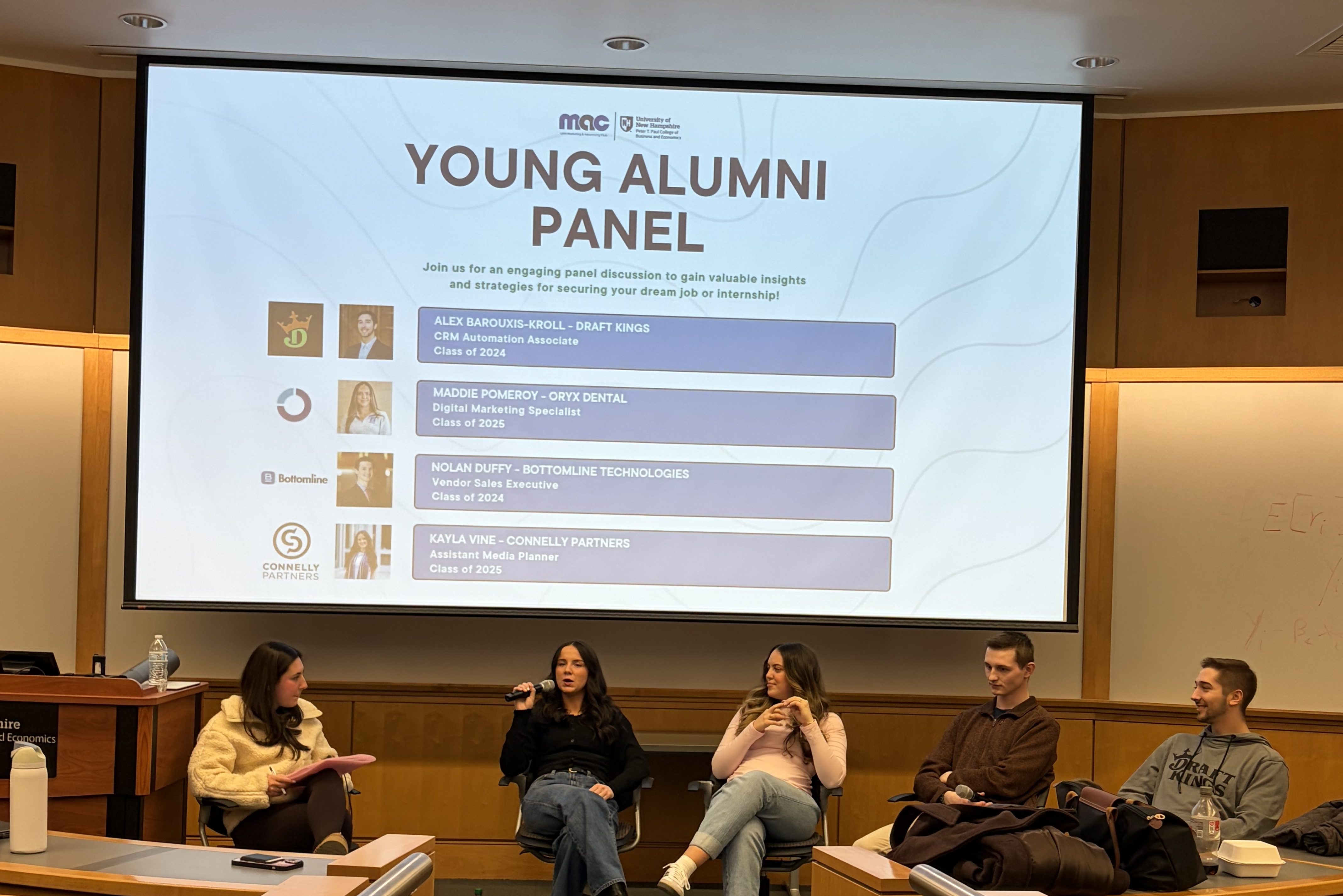
On February 4th, MAC and AMA members had the opportunity to attend an engaging Young Alumni Panel that provided real-world insight into life after graduation. Featuring recent graduates working across sales, media planning, digital marketing, and CRM automation, the panel offered honest advice about navigating the transition from college to a full-time career. The event reinforced the value of networking, involvement, adaptability, and continuous learning, all essential qualities for students preparing to enter the marketing industry.
For students wondering what happens after graduation, this panel served as both reassurance and motivation. Hearing directly from young professionals who were recently in our seats helped bridge the gap between classroom learning and professional success.
Adjusting to Life After College
One of the first topics discussed was the most prominent adjustment alumni faced after graduating. Many panelists emphasized how different full-time work feels compared to college life. Nolan Duffy shared that getting used to a structured work schedule was a significant change, especially after having more flexible class times.
Others highlighted lifestyle shifts beyond the workplace. Maddie Pomeroy noted that moving back home was a difficult transition after living independently for four years, while Alex Burgess-Croll explained that balancing professional responsibilities with personal life can be challenging when you are exhausted after work.
The takeaway? The transition may feel overwhelming at first, but it is entirely normal. Establishing routines, managing time effectively, and setting boundaries all help make the adjustment smoother.
How Networking Opens Doors
If there was one theme repeated throughout the panel, it was the importance of networking.
Several alums credited connections with helping them land their first roles. Kayla Byne explained that her internship managing social media accounts led to another internship and eventually a full-time offer. Meanwhile, Nolan Duffy shared that a friend referred him for his position, giving him an easier entry into the company.
The message was clear: relationships matter.
Students often focus heavily on submitting applications, but building connections can significantly increase opportunities. Whether it is professors, advisors, alums, or peers, the network you develop in college can follow you throughout your career.
One panelist even recommended directly messaging recruiters on LinkedIn to learn more about roles and company culture, noting that having a connection can help you stand out rather than waiting for your resume to be reviewed.
For MAC and AMA members, this reinforces why attending events, participating in competitions, and engaging with guest speakers is so valuable.
Lessons Learned During the Job Search
Not every path to employment is perfectly planned, and that is okay.
Alex Burgess-Croll admitted he “didn’t do enough” during his senior year and found himself scrambling for opportunities. However, an early job still helped launch his career. His experience serves as a reminder that even roles that are not ideal can provide valuable learning experiences and momentum.
Another key piece of advice? Start preparing earlier than you think you need to. Senior year should not be a time to relax completely. Instead, it is an opportunity to strengthen connections, gain experience, and clarify career goals.
As one alum put it, work hard during your final year, it pays off when employers are evaluating candidates.
Skills That Actually Matter in the Workplace
The panel also highlighted the skills that translated most effectively from college into professional roles.
Communication and networking were repeatedly mentioned as essential. Kayla Byne emphasized that being a “sponge,” asking questions, and meeting new people helped grow her professional confidence.
Technical skills can also make a difference. Maddie Pomeroy explained that her familiarity with HubSpot played a significant role in helping her secure her job, even though her experience with the platform was limited.
This is encouraging for students; you do not need to master every tool before graduating. Exposure and willingness to learn often matter more than perfection.
Additionally, alumni stressed the importance of curiosity. Employers expect entry-level hires to make mistakes; what matters is the ability to learn quickly and improve.
Growth Happens Outside Your Comfort Zone
Early-career professionals often face steep learning curves. Panelists shared that thinking quickly, making confident decisions, and learning new industries were all skills they had to develop on the job.
Time management and adaptability were also highlighted as critical for handling changing priorities and workloads.
Perhaps most reassuring was the reminder that mistakes are part of the process. Panelists encouraged students not to fear failure but instead to be honest, seek feedback, and use errors as learning opportunities.
After all, employers hire young professionals with the expectation that they will grow.
Finding the Right Company Culture
Beyond job titles and salaries, alumni emphasized the importance of company culture.
Alex Burgess-Croll shared that different workplaces can vary significantly in expectations and support, making it essential to find an environment where you feel encouraged and aligned with the brand’s mission.
Similarly, Kayla Byne explained that feeling valued and supported — along with having a strong work-life balance- contributed to how much she enjoys her role.
This is an important reminder for students entering the workforce: interviews are not just about proving you are right for the company; they are also about determining whether the company is right for you.
Balancing Work, Life, and Relationships
Many students imagine that once they graduate and begin earning a paycheck, life becomes easier. The reality is more complex.
Panelists discussed how friendships require more intentional effort once everyone is working full-time. Making plans, maintaining routines, and prioritizing personal time are essential for avoiding burnout.
For those working remotely, one alum noted how easy it is to stay inside all day, reinforcing the importance of getting out of the house and building structure into your routine.
The broader lesson is that success is not just professional, it is personal, too. Building a fulfilling life outside of work contributes to long-term happiness and productivity.
Actionable Advice for Students
As the panel wrapped up, alums shared practical steps students can take now to prepare for their future careers:
Get involved. Joining organizations like AMA provides hands-on experience, client exposure, and opportunities to collaborate with teams.
Do not wait to start networking. Building connections while still in college is far easier than starting from scratch after graduation.
Challenge yourself. Trying new courses, participating in competitions, and stepping outside your comfort zone builds confidence that translates directly into the workplace.
Remember, it is never too late. One alum even shared that she switched majors to marketing during her junior year, proving that career paths are rarely linear.
Why Events Like This Matter
The Young Alumni Panel did more than answer career questions; it demonstrated the power of the MAC and AMA network. Seeing graduates succeed in diverse roles shows current members what is possible and provides a roadmap for getting there.
Events like these also highlight something students sometimes underestimate: involvement today creates opportunity tomorrow.
Whether through internships, competitions like ICC, or leadership roles within the club, the experiences you build now shape your professional story.
Final Thoughts
The biggest message from the February 4th panel was both empowering and straightforward: your career is built on the effort you invest before graduation.
Network consistently. Stay curious. Ask questions. Embrace challenges. And most importantly, get involved.
The transition from college to career may feel intimidating, but hearing from young alums proves that success is achievable and often closer than you think.
For MAC and AMA members, this event was not just a glimpse into post-grad life. It was a reminder that the steps you take today are already preparing you for tomorrow.
 AMA University of New Hampshire
Leave a comment